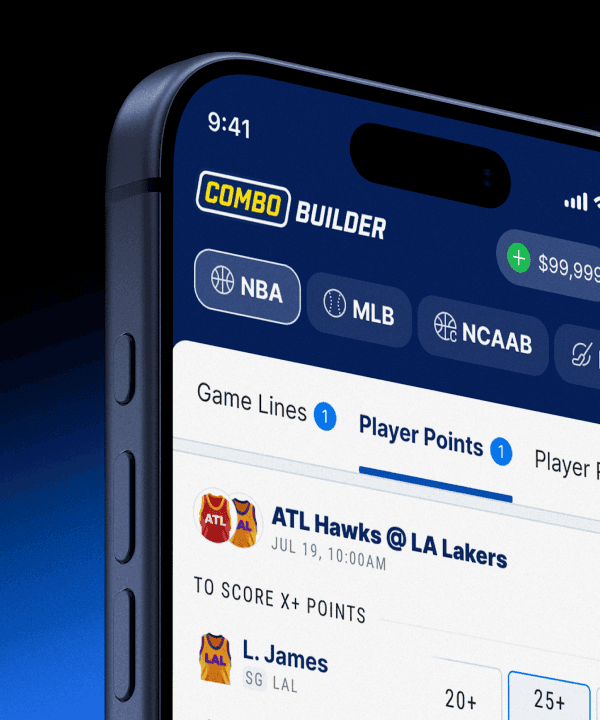
Job Radars
Air traffic control for the job search. Custom and prebuilt radars that watch every career page and ping students the moment a matching role posts.
2026
YEAR
CPO & Product Designer
ROLE
AT A GLANCE
Problem
Entry-level postings get hundreds of applications in days. Across 100+ student interviews, one pattern kept showing up: students who applied within the first 24 hours were far more likely to get seen. Every tool they used was reactive. Students were checking, not being told.
Approach
Turn search into a system that watches for you. A radar can be as broad as "SWE internships" or as narrow as one company. Students build their own or save prebuilt ones from a curated marketplace, then get pinged the second a match hits a career page.
Outcome
Shipping now as Runway's first structurally differentiated feature. Early metric goals based on existing users: 1,000 radars created in 4 weeks, 50% of radar-driven applications submitted within 24 hours.
CONTEXT
The entry-level funnel is broken
Runway scrapes roles directly from company career pages, so postings often land on Runway before they hit LinkedIn or the boards. In a market where one person can auto-fire 200+ applications and a single posting pulls hundreds of unread resumes in days, that head start is the most valuable thing we own.
The product had no way to use it. Search is something a student has to actively do, and the freshest roles sat in our index while students were asleep or in class. The opportunity: turn a data-pipeline advantage into a product advantage, and give 50,000 students an edge the auto-apply crowd cannot copy.
50+
APPLICATIONS A DAY WITH AUTO-APPLY
200+
AVG APPLICATIONS PER ROLE (1 WEEK)
50k
STUDENTS ON RUNWAY
THE INSIGHT
The 24-hour window
Interviews surfaced it, then our data confirmed it: recruiters review in waves, and early applications get human eyes. Students applying within 24 hours of a posting were 10× more likely to land an interview. After that window, applications pile into the hundreds and odds collapse. The entire value of our scraping edge lives inside one day, and no amount of better filtering or ranking extends it.

24H WINDOW TIMELINE DIAGRAM
CREATE NEW
Creating a Radar
Creation starts with one question: what do you want to track? Students can describe it in plain English and the filters get assigned for them, tap a suggested radar pulled from the marketplace, or pick a starting point (a company, a role type, a field). From there the builder is a set of simple tabs: companies, role type, industry, location, alerts. A live count shows how many roles the radar is watching as they go, and the whole thing takes under a minute.

THREE WAYS IN, ONE BUILDER
MY RADARS
The Radar Board
A radar's board is built around one job: make the fresh stuff impossible to miss.
24hrs
THE WINDOW A NEW ROLE STAYS PINNED AT THE TOP OF THE BOARD
New roles land in a highlighted strip at the top, pinned for their first 24 hours, matching the ping that brought the student there. Once reviewed, they settle into the tracked list below, sorted by match score. And on the days a radar catches nothing, the board says so plainly: no recent matches, your radar is on watch. Quiet reads as coverage, not failure, because for a narrow radar quiet is the normal state.

FRESH, THEN TRACKED, THEN QUIET
EXPLORE RADARS
The Marketplace
Not every student knows what filters they want. Explore solves that with prebuilt radars.
Curated by Runway. SWE Internships '26, New Grad Jobs in NYC, and other proven radars, each with live role counts and follower numbers for social proof.
Saved in one tap. A student's first radar doesn't have to be built at all. Save one from Explore, get pinged like everyone else following it, and tweak it later if you want.

PREBUILT RADARS, ONE-TAP SAVE
The marketplace kills the cold start. The distance from "I have no idea what to filter" to "I have a radar watching for me" is one tap.
LOGGED OUT STATE
Sign-up at the moment of value
The part I'm most excited about: radars work without an account. That turns the feature into a growth engine, not just a retention one.
Every radar is a landing page. Radars are shareable links that render fully logged out. A student sends "New Grad Jobs in NYC" to a friend, the friend sees the live roles, and signing up is just the price of getting notified.
The marketplace is a lead magnet. Explore also works logged out with delayed sign-in, a pattern that has already performed well elsewhere in Runway. Someone can browse radars, click into them, even start building one, and we only ask for the account when there's a reason to have it.
UNDER A MINUTE FROM QUESTION TO RADAR

SHARED LINK, NO ACCOUNT NEEDED
CORE LEARNINGS
What we learned along the way
This feature grew out of discovery, and it kept being shaped by what students and our own past products told us.
WHAT WE HEARD
Students weren't struggling to filter jobs. They were anxious about what they couldn't see: postings they missed, timing they got wrong, applications vanishing into piles.
The ones getting interviews had often, by luck or obsession, applied within a day of posting. Nobody had a system for it.
WHAT IT CHANGED
Alerts moved into the save flow. Instant, Daily, and Weekly are set the moment a radar is created, because the ping is the product.
Fresh roles clear themselves. Our old dashboard had a dismiss feature students ignored. On radars, roles age out of the fresh strip after 24 hours on their own. No chores.

IMPACT
What shipped, and what's next
Turned Runaway's job search into a timing advantage. Because we pull roles straight from career pages, students see them here before they reach most of the job boards everyone else is refreshing
Every radar doubles as a shareable landing page, and the marketplace doubles as a logged-out lead magnet with delayed sign-in.
Prebuilt radars mean a student's first radar takes one tap, not a form.
Set up necessary tracking to learn & iterate from here: notification to application rates, how fast students apply after a ping, and which radars drive the most activity.
1,000
RADARS CREATED IN THE FIRST [X] WEEKS
50%
OF NOTIFICATION CLICKS BECAME APPLICATIONS
5,000
OF RADAR-DRIVEN APPLICATIONS SUBMITTED WITHIN 24 HOURS
REFLECTION
What I took from it
The insight was in the interviews, not the analytics. No dashboard surfaces "apply in the first 24 hours." Students told us, once we asked about outcomes instead of features. And once we had it, the radar metaphor did a lot of the design work for free: fresh roles pinned at the top, quiet states that read as coverage, notifications treated as the product instead of a setting.
The other lesson was to let the feature be simple. Radars are a straightforward idea (tell us what you're hunting, we'll watch for it) and the best design decisions were the ones that protected that simplicity: one question to start, one tap to save a prebuilt radar, zero maintenance once it's running.